
How to Register Your Vehicle Online Through Parivahan?

In this digital age, almost everything can be done online, including registering your vehicle. In India, Parivahan is the platform that offers this service. Parivahan is an online service initiated by the Ministry of Road Transport and Highways, Government of India, to provide an integrated system to manage and maintain road transport. With Parivahan, you can register your vehicle with ease, and this article is going to help you with it.
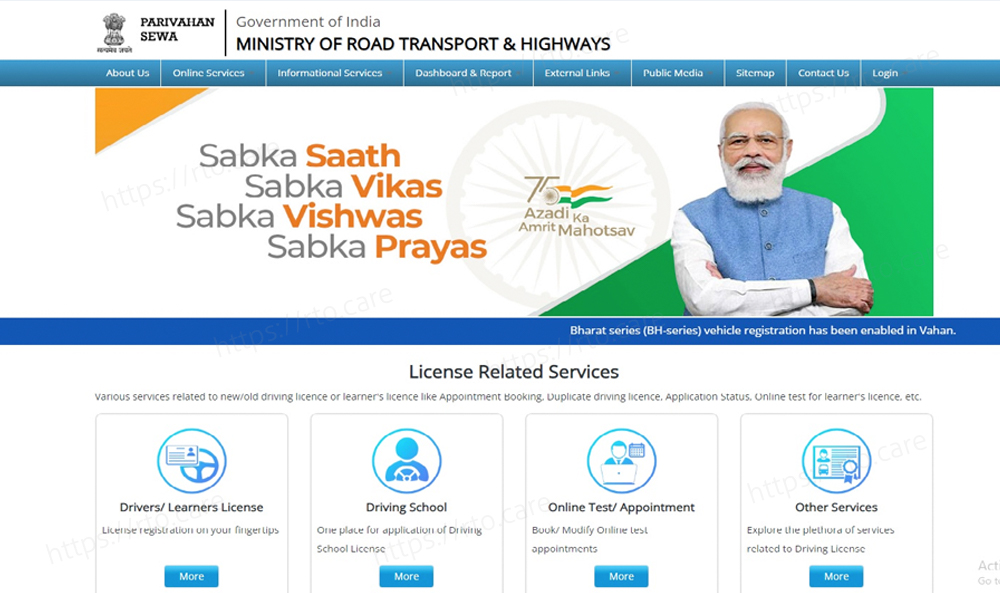


The process of vehicle registration through Parivahan is straightforward and easy to follow. Firstly, you need to visit the official website for Parivahan, www.parivahan.gov.in, and locate the Online Services tab. Click on it and then select Vehicle-Related Services, which will lead you to a new page with several sub-options. Find Vehicle Registration and click on it to initiate the process.


The second step is to select your state and enter the necessary details such as vehicle type, registration number, engine number, and chassis number. Once you have filled in all the required information, you will be directed to the payment window for the applicable fees. You can pay through online banking, debit or credit card, or through net banking-enabled banks. After successfully making the payment, you will receive a physical copy of the registration receipt.


It is important to note that before you can register your vehicle online, the vehicle must comply with the Indian Motor Vehicle Act, 1988, and follow all the prescribed safety norms. Additionally, all vehicles must have a valid registration certificate and be free of any pending fines or violations. It is also worth noting that during the online registration process, a Vehicle Identification Number is assigned to the vehicle.


To ensure that the registration process runs smoothly, you need to have all the necessary documentation. These include the invoice of the vehicle, the original registration certificate, insurance details, pollution under control certificate, and a declaration of compliance with safety norms.


Conclusion, 

Registering your vehicle online through Parivahan is a simple and user-friendly process that allows you to avoid long queues and wasting time at RTO offices. The process is not only convenient but also transparent, allowing you to keep track of all the important documentation from the comfort of your home or office. With the increase in technology, registering your vehicle has never been easier, and with Parivahan, you get a secure and reliable platform to do so.


In addition to Parivahan, several other online platforms offer vehicle registration services in India. However, Parivahan stands out as the most reliable and efficient platform that's highly recommended by the Indian Government. Therefore, it's crucial to take advantage of this wonderful service and make vehicle registration even more comfortable for yourself. With Parivahan, you can be sure of a hassle-free and convenient vehicle registration experience.


Popular posts from this blog

Top Saving Plans in India for Tax-Saving and Building Future Financial Security

 Achieving financial stability requires a well-structured approach to saving and investing. In India, numerous saving plans help individuals secure their financial future while also providing tax benefits. Choosing the right saving plan ensures wealth accumulation, long-term security, and tax efficiency.  Below are some of the top saving plans in India that serve as excellent options for tax-saving and financial security. 1. Public Provident Fund (PPF) PPF is one of the most popular long-term saving plans in India. It offers guaranteed returns and tax benefits under Section 80C of the Income Tax Act. The interest earned and maturity amount are tax-free, making it an attractive investment for risk-averse individuals. 2. Employee Provident Fund (EPF) EPF is a retirement-oriented saving plan for salaried employees. Contributions to EPF are eligible for tax deduction under Section 80C, and the interest earned is tax-free after five years of continuous service. It is an excellent ...

How to Check or Pay Delhi Traffic Police Challans Online

  With the increasing number of vehicles on the road, traffic violations have become a common occurrence in Delhi. If you have received a traffic police challan Delhi , you can easily check and pay it online without visiting the traffic police office. Here’s a step-by-step guide on how to do it. How to Check Traffic Police Challan in Delhi You can check if you have any pending traffic police challan delhi through the official government portals. Follow these steps: 1. Via Parivahan Website Visit the Parivahan e-Challan website. Click on the “Check Challan Status” option. Enter your vehicle number, challan number, or driving license number. Click on “Get Details” to view any pending challans. 2. Via Delhi Traffic Police Website Go to the Delhi Traffic Police website. Click on the “Pending Notices” section. Enter your vehicle registration number and other details. Click “Submit” to check your challan status. How to Pay Traffic Police Challan in Delhi Online If you have a pending cha...

Explore Saving Plans Ideal for Salaried Professionals with Tax Benefits and Fixed Returns

For salaried professionals in India, managing income effectively means finding investment options that not only generate steady returns but also provide tax relief.  Choosing the best saving plan in India involves balancing risk, return, and tax efficiency. Thankfully, there are several saving instruments that cater to these goals. Public Provident Fund (PPF) One of the most trusted long-term saving options, the Public Provident Fund offers an attractive fixed interest rate backed by the government. The interest earned and the maturity amount are both tax-free under Section 80C of the Income Tax Act. PPF has a lock-in period of 15 years, making it a great choice for retirement planning. National Savings Certificate (NSC) NSC is another government-backed savings scheme ideal for conservative investors seeking assured returns. It comes with a five-year lock-in period and offers fixed interest. Investments up to Rs. 1.5 lakh annually qualify for tax deduction under Section 80C, makin...